Disclosure: This site contains affiliate links. If you click and make a purchase, I may earn a small commission at no extra cost to you. Thank you for supporting this blog!"

The Complete Guide to AHA vs BHA: What to Use, What to Avoid & Natural Alternatives
AHA
4/9/20262 min leer

AHA vs BHA: Understanding What Your Skin Actually Needs
Introduction
If you’ve ever tried to improve your skin — whether it’s texture, breakouts, or dullness — you’ve probably come across AHA and BHA.
They’re often talked about as if they’re interchangeable… but they’re not. And something I’ve learned working with ingredients is this:
👉 it’s not about using more — it’s about using the right thing at the right time.
What Are AHAs?
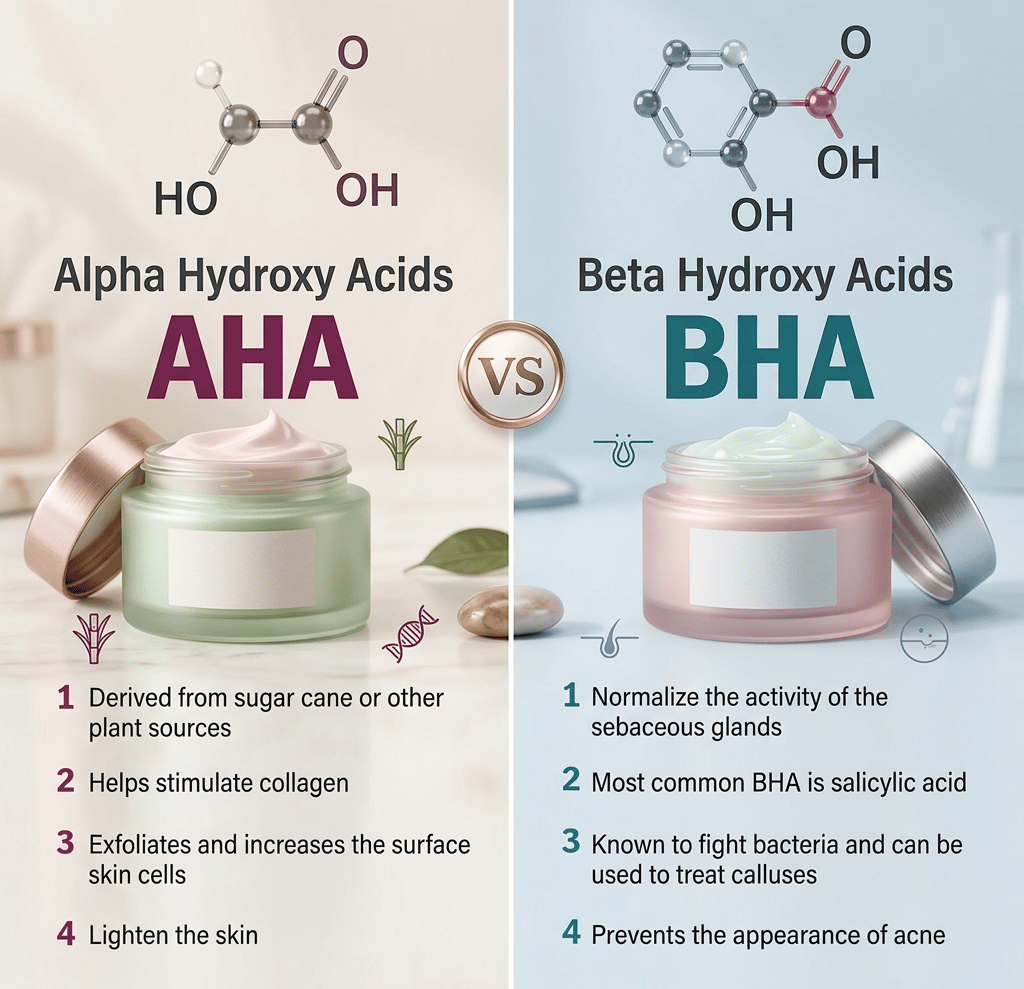
AHAs (Alpha Hydroxy Acids) are water-based acids that work on the surface of the skin.
You’ll usually find them derived from natural sources like:
sugar cane (glycolic acid)
milk (lactic acid)
What they do
AHAs gently loosen the bonds between dead skin cells, allowing them to shed more easily.
👉 This helps:
smooth texture
brighten the skin
improve overall tone
Because they work on the surface, I tend to think of AHAs as skin refiners.
They’re especially helpful when your skin feels:
dull
dry
uneven
What Are BHAs?
BHAs (Beta Hydroxy Acids) are oil-soluble, which completely changes how they behave on the skin.
The most common one is:
👉 salicylic acid (originally derived from willow bark)
What they do
Because BHAs are oil-loving, they can move deeper into the pores.
👉 This allows them to:
dissolve excess oil
clear buildup
reduce breakouts
I usually think of BHAs as pore-focused ingredients.
They’re ideal when dealing with:
clogged pores
acne
excess oil
The Real Difference (Simple)
Instead of overcomplicating it:
👉 Different roles — not better or worse.
How I Approach Using Them
This is where most people go wrong. They try to use everything at once. From a formulation perspective, that’s where irritation starts.
What I usually recommend
Instead of layering them together, I keep things simple:
One night → AHA
Another night → BHA
👉 Never at the same time (especially at the beginning). This allows your skin to actually benefit without becoming overwhelmed.
Common Mistakes I See All the Time
These are small things, but they make a big difference:
Using AHA and BHA together thinking it will work faster
Over-exfoliating the skin
Not supporting the skin barrier with hydration
Skipping sunscreen
👉 Exfoliation without protection is one of the fastest ways to damage your skin over time.
A More Balanced Approach (What I Personally Prefer)
Even though these ingredients are effective, I don’t always rely on strong actives. Some days, I like to keep things gentler and more supportive. That’s where natural alternatives come in.
Natural AHA-style options
yogurt or fermented ingredients (lactic acid)
fruit enzymes (papaya, pineapple)
👉 softer exfoliation, less stress on the skin
Natural BHA-style options
willow bark extract
green tea
herbal extracts
👉 more calming, less aggressive
What I Look for in Products
Instead of focusing on trends, I usually look for:
balanced formulations
supportive ingredients (not just strong actives)
products that don’t strip the skin
👉 I’ve linked a few options I personally like or would use in a routine.
Why Do Products Contain AHA + BHA If They’re Not Supposed to Be Mixed?
The short answer:
👉 They can be combined — but only when they’re properly formulated.
Formulation vs. Layering (THIS is the key difference)
When you hear: “Don’t mix AHA and BHA”.
That usually refers to:
❌ Layering multiple products on your skin
(not controlled, unpredictable, often too strong)
But in a product:
✔ A chemist/formulator controls:
concentration
pH
ingredient balance
delivery system
👉 So the formula is designed to work safely together
Final Thoughts
AHA and BHA are both powerful tools — but they’re not meant to be overused. The goal isn’t to do more.
👉 It’s to understand your skin and work with it.
When you approach skincare this way,
results feel more natural… and more consistent.
Stay
Follow us for fresh finds and tips
Connect
Contact
maguissessentials@maguiss.com