Disclosure: This site contains affiliate links. If you click and make a purchase, I may earn a small commission at no extra cost to you. Thank you for supporting this blog!"
HYALURONIC ACID

COLLAGEN
RETINOL
NIACINAMIDE
PEPTIDES
The Ingredients That Actually Work, And What Each One Does
"Skincare labels are full of names most people can't pronounce and companies rarely explain. This page cuts through that. Here are 8 of the most effective, well-researched ingredients in skincare, what they actually do, who they're for, and how to use them right."
Hydration
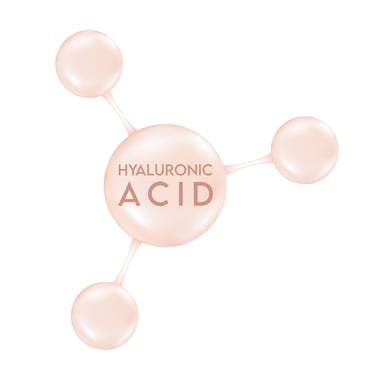
Hyaluronic acid is your skin's natural water magnet. It's a molecule your body already produces, but levels drop with age, stress, and environmental damage. As a skincare ingredient, it pulls moisture from the air and deeper layers of skin up to the surface, giving skin a visibly plumper, smoother appearance within minutes of application. It holds up to 1,000 times its weight in water, which is why it's one of the most studied and trusted hydrators in modern skincare.
Best for: All skin types, especially dehydrated, dull, or fine-line-prone skin.
How to use: Apply to slightly damp skin so it has moisture to draw from. Works best under a moisturizer that seals it in.
Barrier Repair
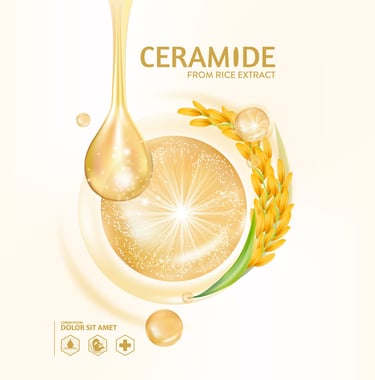
Ceramides are the fats that hold your skin cells together, think of them as the mortar between bricks. They make up about 50% of your skin's outer barrier. When ceramide levels are low (from harsh cleansers, weather, aging, or over-exfoliation), the barrier breaks down: skin becomes dry, sensitive, red, and reactive. Replenishing ceramides through skincare literally rebuilds that protective layer from the outside in.
Best for: Sensitive, dry, eczema-prone, or over-exfoliated skin. Essential for anyone rebuilding a damaged barrier.
How to use: Look for ceramides in moisturizers and use them morning and night. No need to layer, one well-formulated ceramide moisturizer is enough.
Exfoliation & Clarity
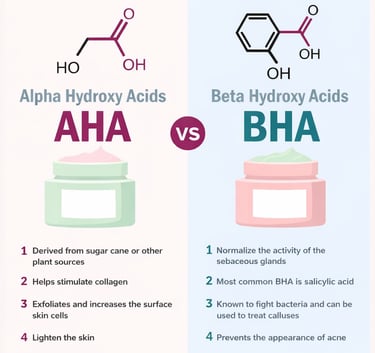
AHA (Alpha Hydroxy Acid) and BHA (Beta Hydroxy Acid) are chemical exfoliants, they dissolve the bonds holding dead skin cells to the surface so your skin can shed them naturally. AHAs like glycolic and lactic acid work on the surface and are great for dullness, uneven texture, and hyperpigmentation. BHA (salicylic acid) goes deeper into the pore and is the gold standard for acne, blackheads, and oily skin. Used correctly, they reveal smoother, brighter, clearer skin without the physical irritation of scrubs.
Best for: AHA → dull, uneven, or aging skin. BHA → oily, acne-prone, or congested skin. Both → use 2–3x per week max.
How to use: Apply at night after cleansing, before moisturizer. Always follow with SPF the next morning, exfoliated skin is more sensitive to UV damage.
CO-ENZYMES CQ10
Firmness & Structure
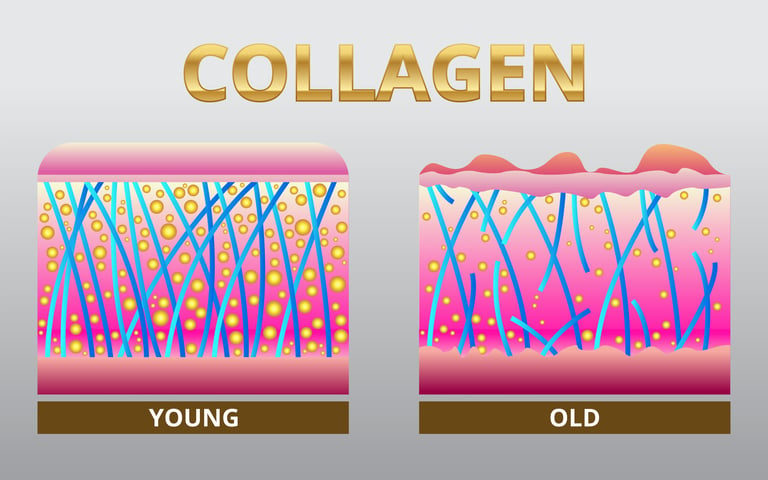
Collagen is the protein that gives skin its structure, bounce, and firmness. Your body produces it naturally, but production starts declining in your mid-20s, which is what causes skin to gradually lose its plumpness and elasticity. As a topical skincare ingredient, collagen molecules in most formulas are too large to penetrate the skin directly. What actually works is supporting your skin's own collagen production through ingredients like peptides, retinol, and vitamin C, or stimulating it externally with red light therapy. Topical collagen still adds surface hydration and a smoothing effect, but it's not a repair tool on its own.
Best for: Anyone focused on anti-aging, firmness, or skin elasticity.
How to use: Use collagen-supportive ingredients (peptides, retinol) rather than relying on topical collagen alone for structural results.
Renewal & Anti-Aging
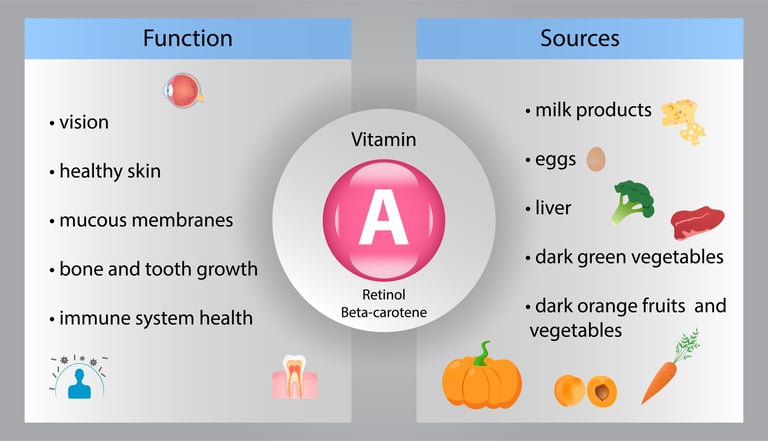
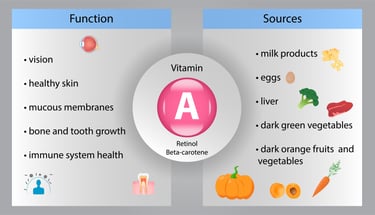
Retinol is the gold standard of anti-aging skincare, and for good reason. It's a Vitamin A derivative that works by speeding up cell turnover, pushing newer, healthier skin cells to the surface faster. The result over time: softer texture, reduced fine lines, faded hyperpigmentation, unclogged pores, and a more even skin tone. It's one of the most studied ingredients in all of dermatology. The catch: it takes patience (results show in 8–12 weeks), and it can cause dryness and peeling when you first start, so the key is starting slow.
Best for: Anyone focused on anti-aging, hyperpigmentation, acne, or texture improvement. Not recommended during pregnancy.
How to use: Night use only, retinol breaks down in sunlight. Start with 2–3 nights per week, always follow with moisturizer, and always wear SPF the next morning. alone for structural results.
Multi-Tasker
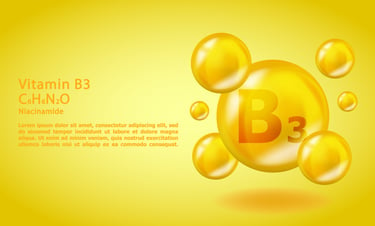
Niacinamide, also called Vitamin B3, is the rare skincare ingredient that does a little bit of everything, well. It strengthens the skin barrier, minimizes the look of pores, evens out skin tone, reduces redness, regulates sebum (oil) production, and fades dark spots. It works at a cellular level to improve how skin looks and behaves over time. Unlike many active ingredients, it causes almost no irritation and plays well with everything, including retinol and acids.
Best for: Every skin type. Especially useful for oily, acne-prone, or uneven skin tone.
How to use: Morning or night, after cleansing. Can be used daily with no downtime.
Antioxidant & Energy
Coenzyme Q10 (CoQ10) is a naturally occurring antioxidant your body produces to fuel cellular energy, including the energy your skin cells need to repair themselves. Levels decline significantly with age and sun exposure, leaving skin less equipped to fight oxidative stress (the damage caused by UV rays, pollution, and free radicals). As a topical ingredient, CoQ10 neutralizes those free radicals, supports collagen production, and helps reduce the visible signs of aging like fine lines and loss of firmness. It's a quiet but powerful addition to any anti-aging routine.
Best for: Mature skin, or anyone focused on long-term protection and prevention.
How to use: Works well in serums or moisturizers used morning or night. Pairs well with Vitamin C and SPF for a full antioxidant defense in the AM.
Anti-Aging & Repair
Peptides are short chains of amino acids, the building blocks of proteins like collagen and elastin. When applied to skin, they act as messengers, signaling your cells to produce more collagen, repair damage, and strengthen the barrier. Unlike retinol, peptides deliver anti-aging benefits with zero irritation, making them ideal for sensitive skin or anyone who can't tolerate stronger actives. They're one of the most underrated ingredients in skincare, quietly effective, with results that build over time.
Best for: All skin types, especially sensitive skin or anyone new to anti-aging ingredients.
How to use: Apply after cleansing in a serum or moisturizer. Use morning and/or night, no restrictions on frequency.
Stay
Follow us for fresh finds and tips
Connect
Contact
maguissessentials@maguiss.com